» Main Index

» Search This Site
» Submit Update
» Contact Us
|
|

|
Home > Yorkshire >
Selby > Rose & Crown
Rose & Crown
 |
|
Picture source: Peter Ashworth |
|
|
|
|
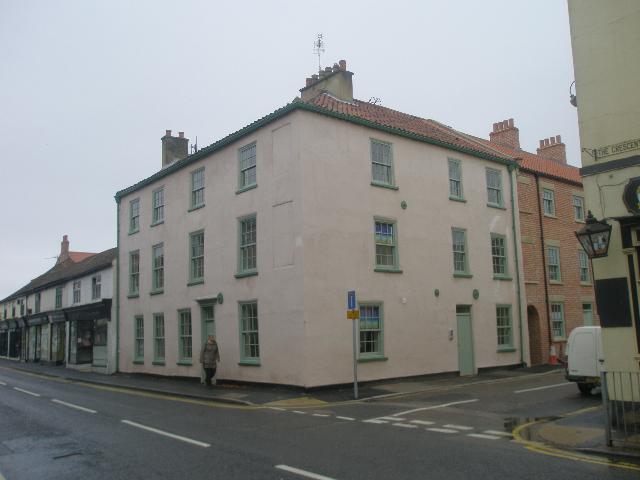
The Rose & Crown was situated at 12 New Street.
This pub closed in 2008 and has now been converted into apartments. |
|
|
|
|
|
|
From Historic England: |
Selby as a settlement dates to the
Anglo-Saxon period, when it was known as Seletun (old Scandinavian for
‘sallow tree settlement’) and was referred to by the Anglo-Saxon Chronicle
of AD 779. A charter of about 1030 called it Seleby and about 1050 it was
Selbi. King Henry I was born in Selby in 1068 and, a year later, Benedict, a
French monk from Auxerre, obtained permission from King William to establish
an Abbey. The Market Place has existed since the early C14. By the C15,
Selby had developed thriving trade links along the East Coast and with the
Low Countries. Selby Abbey succumbed to dissolution in 1539, and the core of
the building became the parish church in 1618.
Selby’s commercial importance grew dramatically following the opening of the
Selby Canal in 1778, becoming a notable inland port; however, after the
building of Goole Docks in 1826, it suffered a very rapid decline. The
town’s fortunes recovered in 1834, with the opening of the Leeds and Selby
Railway, and by the early C20, witnessed a growth in several industries
served by the railways and river traffic, including flour milling, malting,
oilseed milling and cattle feed production. In 1983, coal production
commenced from the Selby Coalfield. Shipbuilding ended ten years later, and
coal mining ceased in 2004. Since then, there has been a gradual reduction
in the traditional industries, although some remain.
New Street was laid out during the last decade of the C18 and the first
decade of the C19 to connect Selby town centre to the new Selby Toll Bridge,
and to the riverfront. The bridge was completed in 1792 and replaced an old
foot ferry that had been an impediment to both vehicular traffic and trade.
New Street provided a through-route for traffic travelling to and from the
West Riding, Leeds, York and the East Riding. This increased traffic
provided trading opportunities that resulted in the construction of several
shops and public houses along the street. The three-storey Rose and Crown
was the largest public house and had several rooms available for board and
lodge. The earliest known publican was recorded in 1837 as Ellen Thornton.
In 1860, it was recorded that carriers by horse and cart left from here for
South Duffield, North Duffield and Barlby. The 1849 Ordnance Survey town map
shows the building as having a L-plan that has remained basically the same
to the present day (2023); however, a map of 1890 indicates that the
left-hand bay of the ground floor of the main elevation was once occupied by
a passageway which gave access to the rear of the property, where there was
a brewery. It remained in continuous use as a public house until 2008, when
it was finally closed and converted into one- and two-bedroom apartments. |
|
|
|
Do you have any anecdotes, historical information, updates or photos of this pub? Become a contributor by submitting them here.
Want to make contact with other customers and publicans of this pub? Add your details here. |
|
|